
The Complete Guide to Dynamic Product Ads That Actually Scale
Everything ecommerce brands, paid media specialists, and agencies need to know about building high‑performing catalog ads in 2026.

What Are Dynamic Product Ads (DPA)?
Dynamic Product Ads, often called catalog ads, automatically pull products from a product feed and match them with users based on intent signals like browsing behavior, past purchases, and interests. Instead of manually creating ads for individual products, advertisers connect a feed and let platforms dynamically assemble relevant ads at scale.
Unlike static ads, DPAs adapt in real time. The product image, title, price, availability, and even promotional messaging can change automatically depending on the user, placement, and timing. This is why catalog ads have become the default performance format for ecommerce brands across Meta, Google, TikTok, Pinterest, and more.
Why Catalog Ads Outperform Static Ads
Catalog ads win because relevance wins. Platforms reward ads that feel personal, timely, and useful. DPAs deliver all three by combining live product data with behavioral targeting.
For advertisers, this translates into higher click‑through rates, stronger conversion rates, and lower CPA over time. Instead of guessing which product to promote, the algorithm selects the most relevant SKU for each user.
Many brands already experience this effect with retargeting, but the real performance lift comes when DPAs are used across prospecting, mid‑funnel, and retention campaigns.
How DPA Works Behind the Scenes
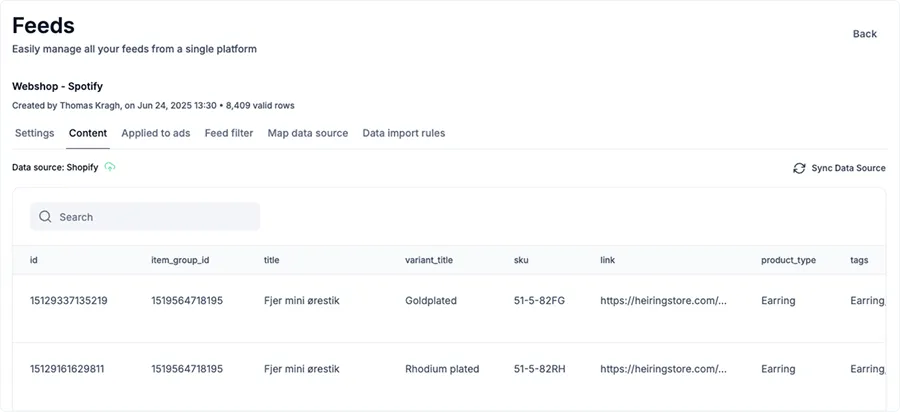
At the core of every catalog ad is the product feed. This feed contains structured data such as product ID, title, description, image URL, price, availability, category, and custom attributes.
Ad platforms use this data to dynamically generate ads and decide which product to show to which user. The better structured and enriched the feed is, the more control advertisers have over messaging, creative, and optimization.
This is also where many teams struggle. Feeds are often treated as a technical setup step instead of a strategic growth lever.
The Role of Creative in Modern Catalog Ads
One of the biggest misconceptions about DPAs is that creative does not matter. In reality, creative is one of the strongest performance levers once the feed is connected.
High‑performing catalog ads combine dynamic product data with branded layouts, lifestyle imagery, overlays, price badges, and promotional messaging. Instead of showing raw product images, top advertisers use templates that adapt visually while staying on‑brand.
If you want to go deeper into catalog creative best practices, this guide pairs well with our article on building scalable ad templates for performance campaigns: https://www.campaignbuilder.io/blogs/catalog-ads-that-scale-your-product-marketing-automatically
Common Mistakes Brands Make With DPAs
Many advertisers launch DPAs and assume performance will automatically scale. In practice, poor structure limits results.
Common issues include using generic product images only, missing custom labels in feeds, running a single template across all products, and failing to refresh creative over time. These mistakes lead to ad fatigue and underutilized data.
How Campaign Builder Improves Catalog Ad Performance
Campaign Builder is designed for teams that want full creative and structural control without slowing down execution. Instead of choosing between design flexibility and automation, Campaign Builder combines both.
You can build reusable catalog ad templates, connect feeds once, and scale across formats and networks while maintaining consistent branding. Creative changes can be rolled out across hundreds or thousands of products instantly.
Learn more about how our catalog ad product works here: https://www.campaignbuilder.io/products/catalog-ads
When to Use DPAs in Your Funnel
Dynamic Product Ads are no longer just for retargeting. The strongest advertisers use them across the entire funnel.
In prospecting, broad catalog campaigns allow platforms to discover which products resonate with new audiences. In mid‑funnel, DPAs reinforce consideration with category‑level messaging. In retargeting, product‑specific ads close the loop.
Final Thoughts
DPAs are not a shortcut. They are a system. Brands that treat catalog ads as a strategic channel, invest in creative structure, and optimize feeds consistently are the ones that see compounding returns.