BigCommerce provides a structured ecommerce foundation that makes catalog ads easier to scale, but performance still depends heavily on product feed quality and segmentation.
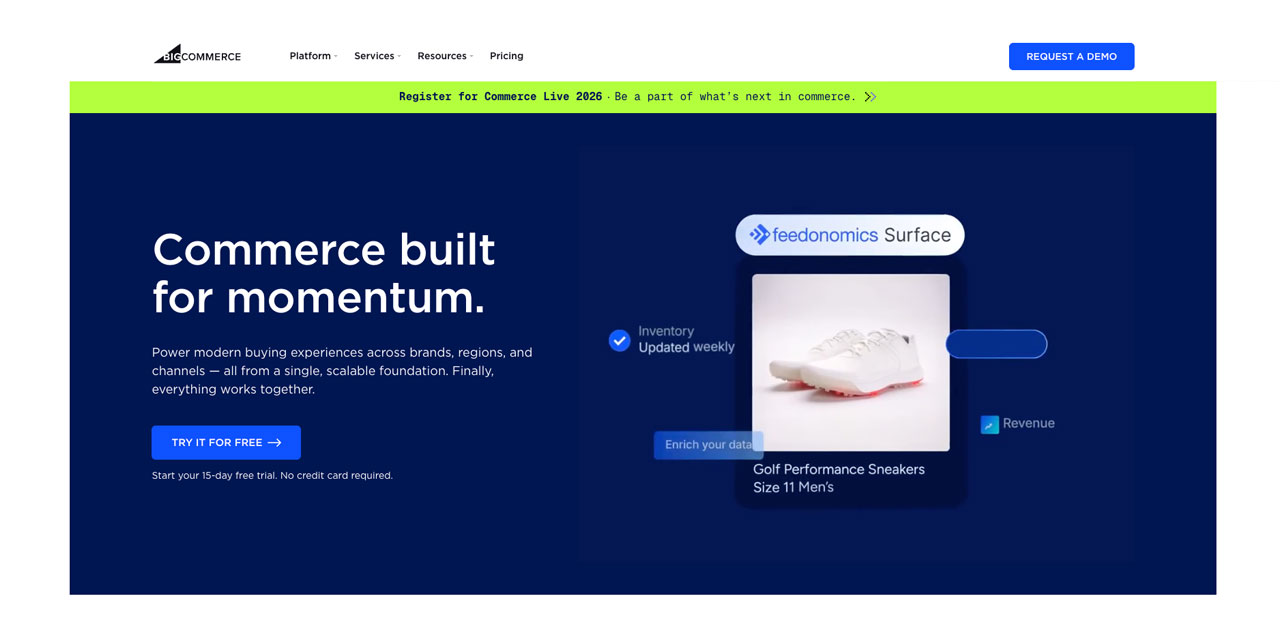
BigCommerce is a SaaS ecommerce platform designed to handle large and growing product catalogs. Compared to more fragmented systems, it provides a more structured foundation for product data, which makes it easier to work with catalog ads.
However, even with a structured platform, performance still depends on how well the product feed is built and maintained.
Even though BigCommerce gives you cleaner data than many platforms, the product feed is still the core driver of catalog ad performance.
If product titles are inconsistent or attributes are missing, ads will still underperform regardless of platform stability.
The biggest gains usually come from:
Standardized product titles
Consistent attribute structure
Clear product categorization
Proper availability and pricing accuracy
Without this layer, scaling becomes inefficient and expensive.
BigCommerce performs well at scale because it reduces many of the structural problems found in other platforms.
This allows advertisers to focus more on campaign strategy rather than fixing product data issues.
Scaling typically comes from expanding product coverage without manual ad creation, using dynamic product sets instead of static campaigns, continuously updating feeds based on inventory changes, and aligning product structure with campaign segmentation.
This is where automation starts to become a major advantage.
Even with a strong backend structure, many stores still run into issues such as product attributes not being enriched enough for ad platforms, lack of segmentation between high and low performers, no dynamic logic applied to product sets, and weak alignment between feed structure and campaign structure.
These issues usually appear once advertising spend increases.
The most effective BigCommerce setups treat the product feed as a performance system, not just a data export.
That means continuously improving attribute depth, product grouping logic, feed segmentation rules, and data consistency across updates.
When this is done correctly, catalog ads become significantly more scalable and predictable.
https://www.campaignbuilder.io/products/catalog-ads

